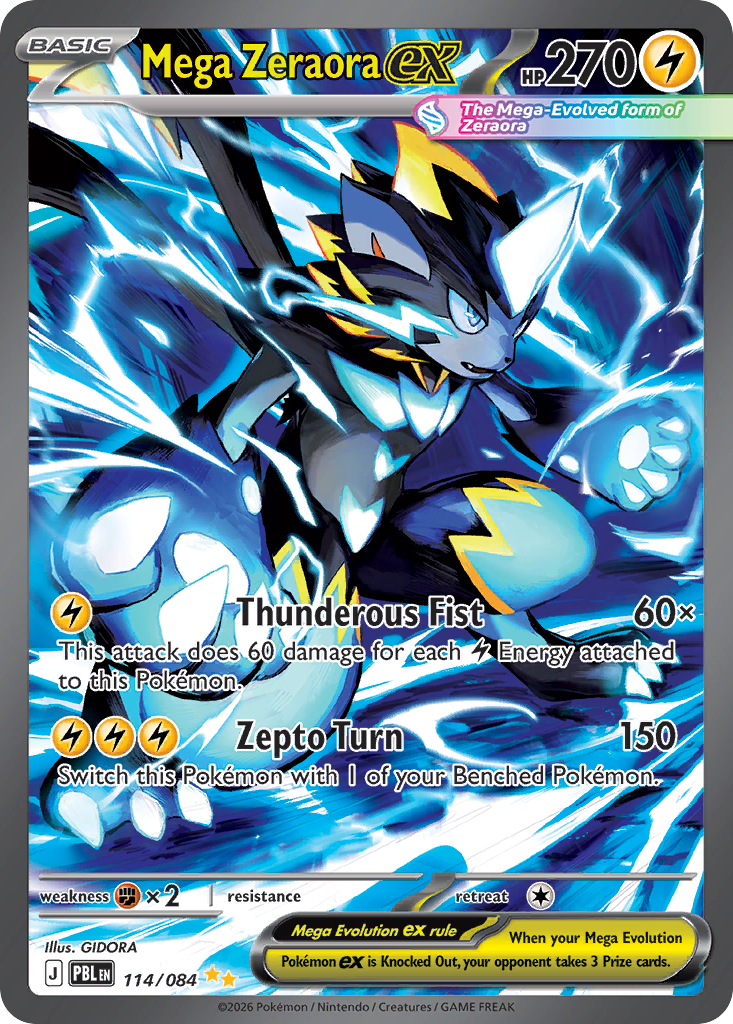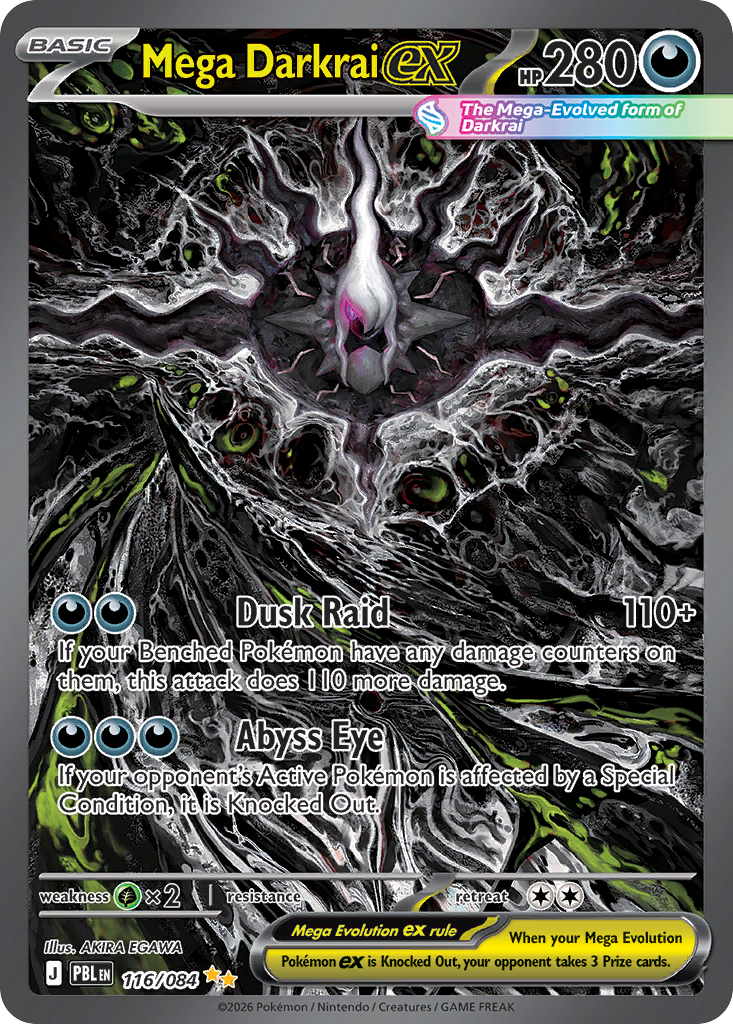
Pitch Black put a nightmare Darkrai on the box, and for once the chase card earned the billing. Mega Darkrai ex, number 116 of 84, illustrated by Akira Egawa, is the special illustration rare people have been posting since the set landed on July 17, 2026. Hold it at arm's length and you do not read it as a Pokemon at first. You read it as an eye, wide open, staring back out of the card.
The art
A special illustration rare, or SIR, is the top art tier a modern set prints. The illustration runs to all four edges, the rules text is squeezed into a strip at the bottom, and the illustrator gets the entire card as canvas. Pitch Black prints only six: three Mega ex, the Morpeko ex, and two Supporters. This one is the reason the set is called Pitch Black.
Egawa builds the whole card as a single radial composition. Dead center is Darkrai's head, rendered in cold bone white, its spiked collar fanned out into a ring of pale blades and its hair drawn up into one long white plume. Set into that pale mass is a single narrow eye glowing hot magenta. It is the only warm thing in the frame, and it functions as a pupil for the entire card.
Everything else spirals out from it. The background is not a sky or a city, it is a poured black surface, marbled and slick, closer to ink dropped in oil than to any painted landscape. Silver white ripples run through the black in concentric bands, and because they curve around that central head, the card reads as an iris. Scattered through the dark are small pockets of acid green, several of them shaped like little eyes of their own, so the longer you look the more the void looks back. Black, silver, magenta, and that one poisonous green are the entire palette. There is no horizon and no ground plane anywhere in the illustration.
The design symmetry is lovely. The card's second attack is called Abyss Eye, and Egawa painted an abyss that is an eye.
Egawa has been an official Pokemon TCG illustrator since 2019, starting with a Lurantis and a Riolu in Unified Minds, and his catalog is loaded with cards collectors chase on his name alone: the Charizard ex special illustration rare in Obsidian Flames, Chi-Yu ex in Paldea Evolved, Tulip in Paradox Rift, Team Rocket's Moltres ex in Destined Rivals, Mega Hawlucha ex in Ascended Heroes, and the gold Giratina VSTAR and Arceus VSTAR in the Crown Zenith Galarian Gallery. One correction worth having, since it comes up constantly: he did draw the Umbreon VMAX in Evolving Skies, card 95, but he did not draw the alternate art everybody calls Moonbreon. That one is Keiichiro Ito.
Why it is trending
The catalyst is simply that people are opening this set right now and the art delivered. Pitch Black released worldwide on July 17, 2026, and the marketing had already promised a dark set with a Darkrai centerpiece. Sets usually undersell that promise. This one did not, and the collector reaction in the weeks since has been to call the card a career high point for an illustrator who did not need one.
It helps that Egawa is one of the handful of names the secondary market treats as a premium by itself, in the same tier where a card gets bought because of who signed it. Pitch Black is his second Mega era special illustration rare after Mega Hawlucha ex, and this is the one that got the cover slot. It is the most expensive card in the set by a wide margin, which is what you would expect from the top Mega SIR, so the price is not the interesting part. The interesting part is that the art conversation and the price conversation agree for once, which almost never happens in a launch window.
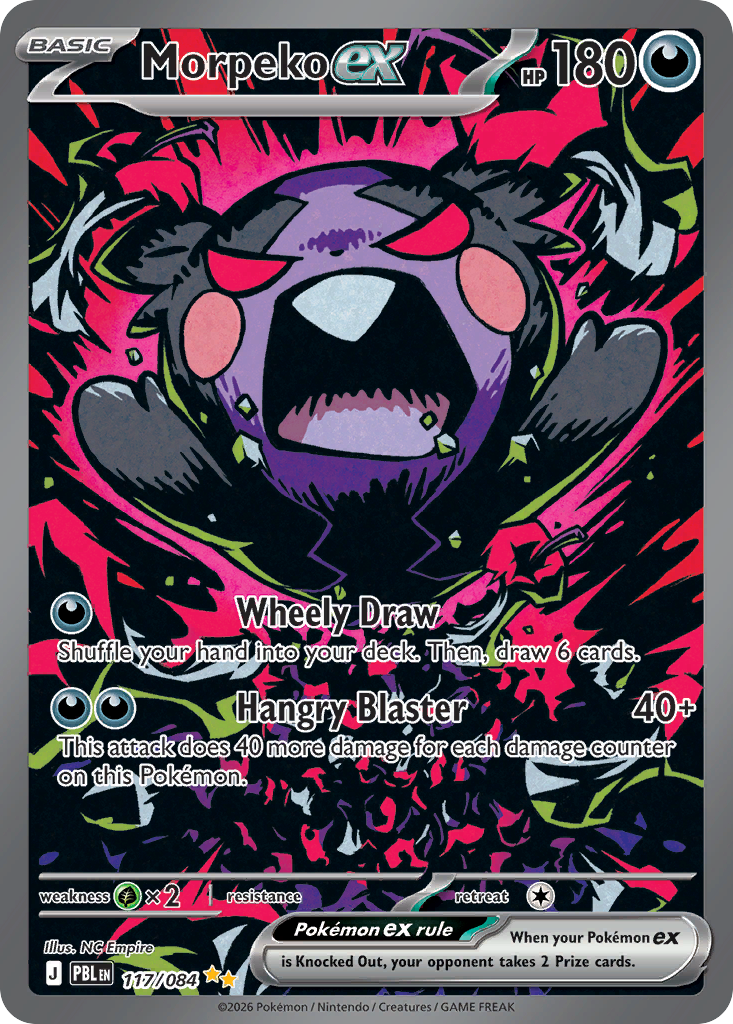
Be honest about the hype. A set less than a month old has unsettled prices, "best card of the era" gets said about something every few months, and the same set produced a much cheaper surprise in the Morpeko ex special illustration rare that outperformed two of the Megas on comedy alone. What is durable here is the illustration itself. In five years the market will have moved and the card will still be a black mirror with a magenta eye in it.
Build a binder page around it
This is a card that eats its neighbors. Full bleed black art reads as negative space in a binder, so drop it next to pastel or white bordered cards and the page looks like it has a hole in it. There are two ways to use that instead of fighting it.
The single pocket feature is the easy one. Give it a whole spread with two or three quiet cards for company and let the black do the work. The magenta eye is the only focal point in the illustration, so it stays the focal point of the page.
The better project is a full black page. Sketch it in the builder, run color sort, and pull every near black illustration in your collection into one spread. Pitch Black alone gives you a deep bench: Nakamura Ippan's Dhelmise illustration rare brings a drowned green that rhymes with Darkrai's acid accents, and the Gwynn special illustration rare brings the character art and a cooler violet. Put Darkrai in the center pocket of a nine card grid and let the surrounding eight get progressively lighter toward the corners. The eye does the rest.
One handling note that matters more here than usual. Dark full art cards show edge whitening instantly, so this is the wrong card to slide in and out of pockets while you rearrange. Plan the page first, which is exactly what the guide to organizing a Pokemon binder is for, then sleeve it once and leave it alone.
The takeaway for anyone building a page around a chase card is that composition beats subject. Egawa did not win this set by drawing Darkrai bigger or angrier than anyone else would have. He built a shape that survives at any size, from a full spread down to a thumbnail, because the whole card is one clear symbol. When you are picking a center pocket, pick the card that still reads from across the room. That is the one people will stop on.