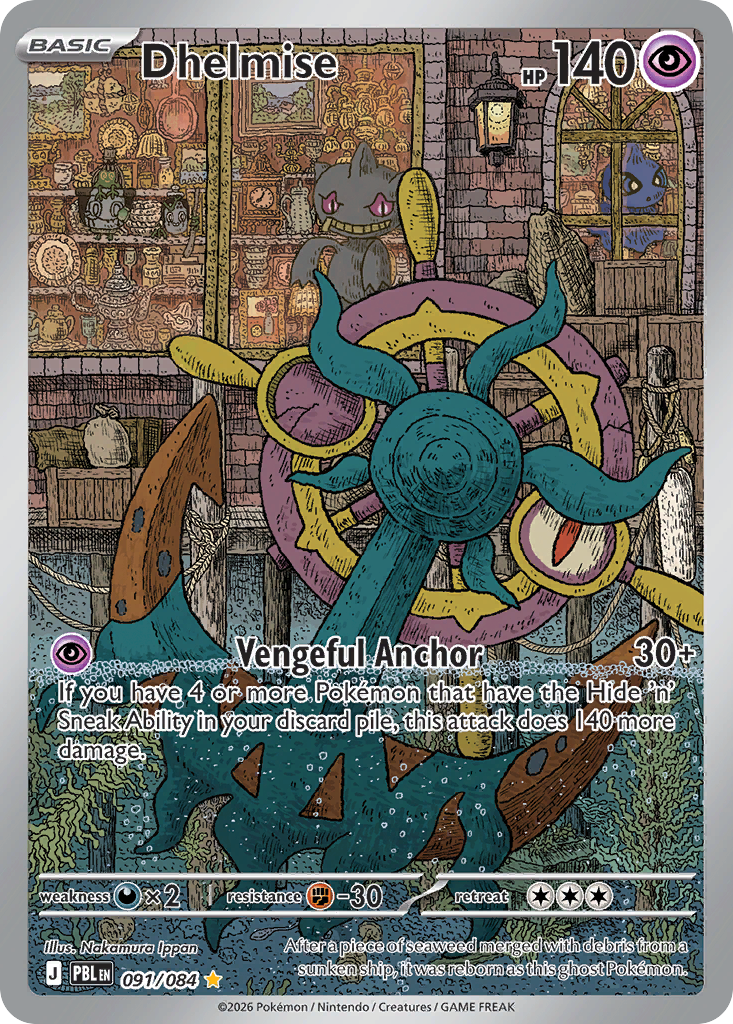
Dhelmise is a clump of seaweed wrapped around a ship's anchor with one eye in it. It has never been a chase card, it has never been in a deck anyone talks about, and its normal print in Pitch Black is an uncommon that goes straight to the bulk box. Then Nakamura Ippan got the illustration rare, number 91 of 84, and turned the least wanted Pokemon in the set into the card with the most going on in it. There are four other Pokemon hiding in the frame.
The art
An illustration rare, or IR, sits one tier below a special illustration rare. The artwork fills the whole card, but the artist keeps the normal attack layout printed on top of it instead of getting the full canvas, and the print run is far larger. In practice that makes the best illustration rares the cheapest genuinely great art in modern Pokemon. This is one of the best in the set.
The scene is a dockside curio shop with the sea coming in. A waterline cuts across the lower third of the card in a band of foam and bubbles: everything above it is a dry, warm, obsessively cluttered antique shop, and everything below it is cold green water full of seaweed. Dhelmise straddles both. Its teal tendrils climb up through the shop while its anchor stays submerged, and its ship's wheel, painted in dusty rose and yellow, sits dead center like a stained glass window. The one eye is off to the right, a yellow ring around a red slit.
The palette is the surprise. This is a ghost card in a set called Pitch Black and almost none of it is black. The walls are rust and brick red, the shelves are ochre and warm brown, and a single wrought iron lantern mounted on the brick pillar does all the lighting. The only cool colors in the frame are Dhelmise itself and the water, which is why your eye goes straight to the middle and stays there.
Then you start finding things. Banette floats at center left in front of an antique mantel clock and a pewter coffee pot, gray, with two pink slit eyes and the yellow zipper mouth. Shuppet is watching from the next room through an arched window with wooden bars, one big eye and a horn. On the shelf to the left, Sinistcha and Poltchageist are sitting among the actual crockery, and they are drawn exactly like the teapots and cups around them, so you can look at that shelf twice before you notice two of the vessels have faces.
That is not decoration. All four share the Hide 'n' Sneak Ability, and the card's own attack, Vengeful Anchor, does 30 damage plus 140 more if you have four or more Hide 'n' Sneak Pokemon in your discard pile. The illustration is a picture of the attack text. The four Pokemon the card needs are the four Pokemon hidden in the room.
Nakamura Ippan draws everything at the same weight. There is no blur, no depth of field, no soft background. Every roof tile, plate, jar, and blade of seaweed gets the same thickness of outline and a flat fill, which is why the card looks like a woodblock print and why it takes a minute to read. Their catalog is small and remarkably consistent: a Swinub half buried in a snowy thicket in Journey Together, an Electrike in Destined Rivals, a Basculin in White Flare, and a Nymble in Phantasmal Flames that is almost invisible inside a mat of dandelion leaves. Every single one of those is an illustration rare. Their only other card in Pitch Black is the regular Marshadow at number 40.
Why it is trending
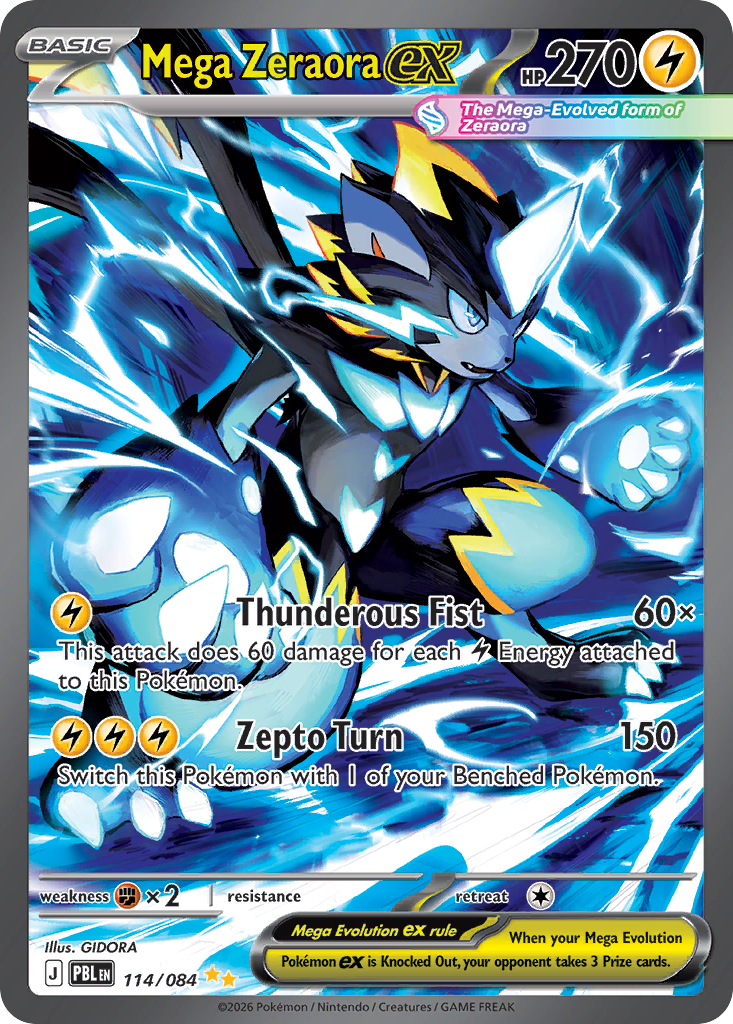
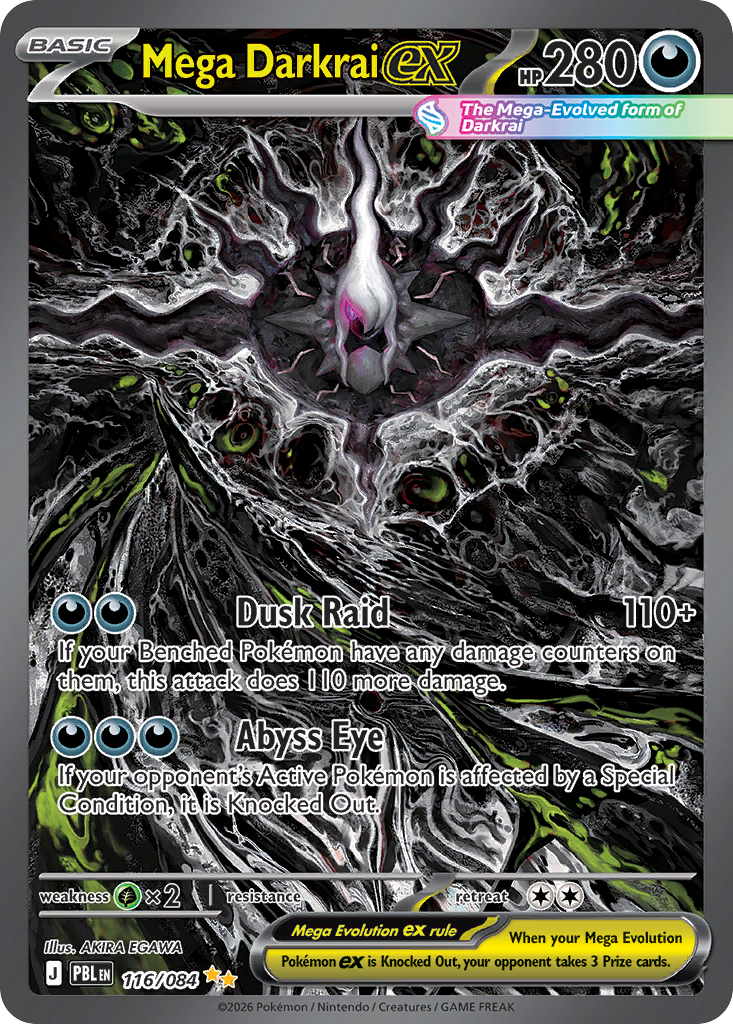
Pitch Black landed on July 17, 2026, and for the first ten days the art conversation was about the top of the set. Akira Egawa's Mega Darkrai ex special illustration rare is the chase and deserves to be, and the Morpeko ex special illustration rare was the surprise that outran two of the set's own Mega ex.
What moved Dhelmise was The Pokemon Company itself. On July 27 they published an art feature on the expansion and opened the illustrator section with Nakamura Ippan, describing them as an artist who draws everything in frame from the smallest leaf to the largest tree, and naming Shuppet, Banette, Sinistcha, and Poltchageist outright. Being told where to look changes a card like this. A dense illustration that most people scrolled past becomes a puzzle they want to solve, and the posts that followed were people circling the shelf.
Be clear about what this is and is not. The Dhelmise IR is not expensive and there is no good reason to expect it to become expensive: illustration rares print in volume, Dhelmise is not a popular Pokemon, and the card does nothing competitively. That is the whole appeal. This is the best art in the set that you can actually afford to put in a binder, which is a much better position for a collector than being the Darkrai.
Build a binder page around it
The warm brown palette is the practical problem and the practical opportunity. Most binders end up sorted into red, blue, green, and yellow blocks, and brown cards have nowhere to go, so they get scattered one per page where they always look like mistakes. Run color sort in the builder and pull every rust, brick, and ochre card you own into one spread, and suddenly you have the warmest page in the binder instead of nine orphans.
The better page is the one the card is asking for. Build a hide and seek page: nine pockets, every card an illustration where the Pokemon is buried in an environment rather than posed in front of one. Dhelmise takes the center pocket because it has the most to find. Its own cast fills the ring around it, since Sinistcha, Poltchageist, Shuppet, and Banette all have cards, and the page then reads as one scene broken into nine windows. It is the same trick as a connected illustration without needing the cards to physically line up, which is worth comparing to the Clefairy illustration rare that is literally half of a painting.
There is also a cheap artist page here. Nakamura Ippan has five illustration rares total, so Swinub, Electrike, Basculin, Nymble, and Dhelmise fit in a single nine pocket page with four slots to spare, and the whole run costs less than one mid tier chase card. Fill the remaining pockets with the same set, or leave them empty and let the page grow. The guide to organizing a Pokemon binder covers how to plan a feature page before you start buying, which matters more on a page like this than on a color page you can rearrange forever.
The takeaway is one worth repeating every time a set drops. A set tells you what to care about, prints it at the top rarity, and puts it on the box, and it is almost never the card you will keep going back to. The card you go back to is the one with something left to find on the twentieth look. In Pitch Black that card costs a couple of dollars and keeps two of its ghosts hidden on a shelf of teapots.