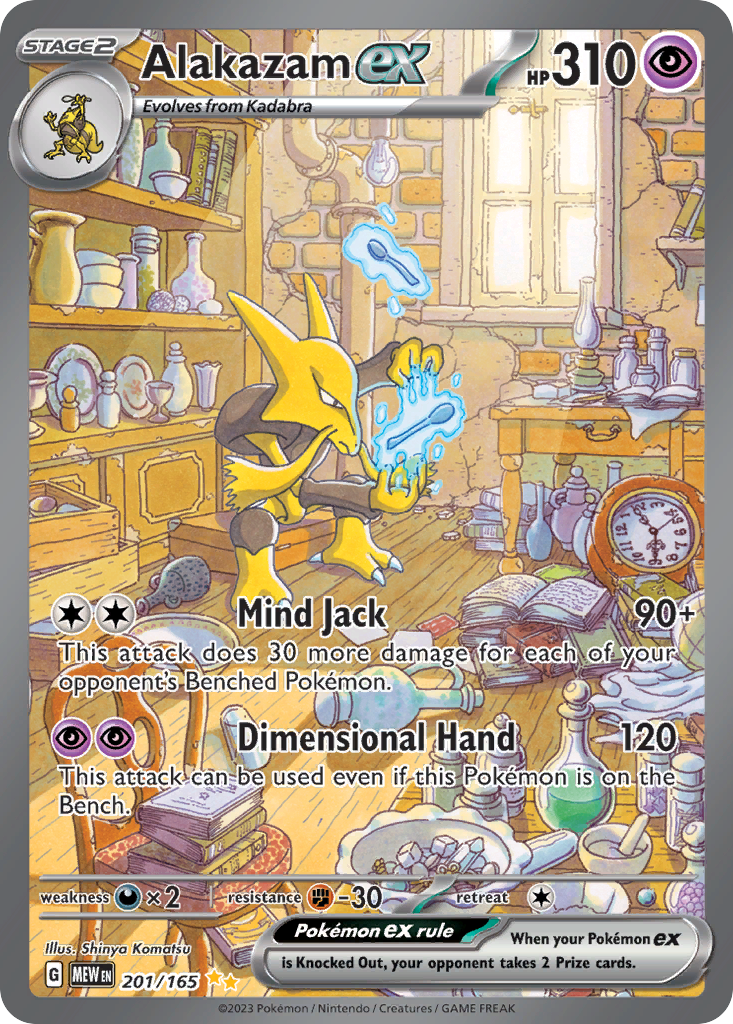
The Alakazam ex from 151 does not look like a battle. It looks like somebody's workshop in the late afternoon, jars and bottles crowding every shelf, a book left open on the desk, plaster peeling off the brick behind, and Alakazam floating through the middle of it bending a spoon. That room is the point of the card. The pokemon card artist who drew it is Shinya Komatsu, and before any Pokemon work, they were making manga and picture books in Kochi.
Who is Shinya Komatsu
The outline comes from the Japanese Wikipedia article on Komatsu Shinya, which cites the Kochi Shimbun newspaper and the Yokoyama Ryuichi Memorial Manga Museum for the biographical details. Born 14 April 1982 in Kochi City, raised in the town of Ino, drawing comics since the second grade and submitting them to a regular manga corner in the local paper from middle school onward. In 2001, still a student, Komatsu took the story division top prize at the Kuroshio Manga Taisho, a Kochi competition. The judges' write up praised the distinctive gentle art style and said the winning entry holds a reader inside its invented world right to the end, a description that still fits the card work twenty five years later.
The professional debut came in 2004, when a short story ran in the alternative manga magazine Axe and won an individual prize at that year's Axe newcomer award. Seirinkogeisha collected the early work in 2011. After that came a web comic serialized on the site Pokopoko, a series set in a town called Tsurumaki that ran in Monthly Comic @Bunch, and a picture book from Akane Shobo, Mirai no Ichinichi, which Komatsu both wrote and illustrated.
The Pokemon cards started late and stayed rare. Bleeding Cool's artist spotlight puts the first credit at the Octillery Trainer Gallery card in Brilliant Stars in 2022, and the Pokemon TCG API lists only 18 English cards under the name today. Five of those 18 are Illustration Rares or Special Illustration Rares and two more are Trainer Gallery cards, so a card shop that has never heard of Komatsu is still pulling their work out of the top slot of a set.
How to spot one of their cards
The working method is visible on every card: build the place first, then let the Pokemon live in it as a resident rather than pose in front of it as a subject. Everything gets a clean dark outline, backgrounds included, and the color inside those outlines is flat and matte with very little soft shading anywhere. It reads much closer to a children's book spread than to the airbrushed painting most sets default to, which makes sense given the day job.
Then there are the props, which is where Komatsu hides the actual storytelling. Look at the clock on that Alakazam ex. It is a normal brass desk clock sitting among the bottles, except the 12 is on the left side of the dial instead of the top, so the whole face has been quietly rotated a quarter turn by whatever has been going on in that room. Nothing on the card points at it, there is no spotlight and no sparkle drawn around it, and most people who own the card have never looked.
In a binder page the tell is simple. If your eye lands on the furniture, the weather or the water before it finds the Pokemon, you are probably holding a Komatsu.
Five cards worth hunting
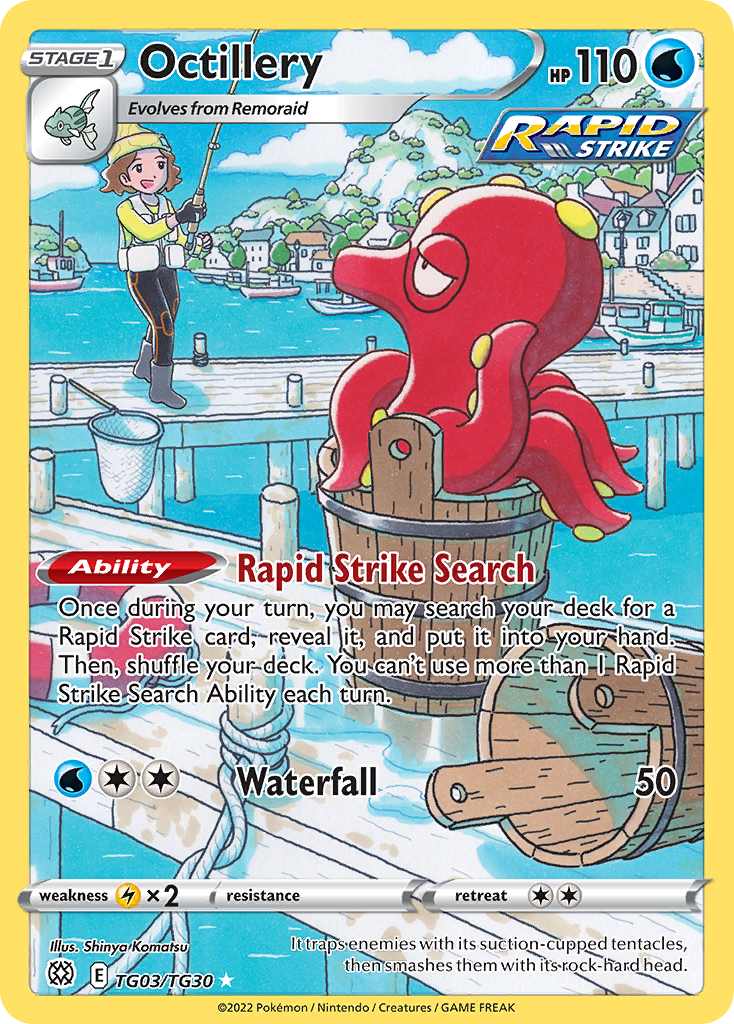
Octillery, TG03 of the Brilliant Stars Trainer Gallery, 2022. The first Pokemon credit, and the whole approach is already there. An angler in a yellow cap and life vest stands on a concrete dock with the rod bent, Octillery is wedged into a wooden barrel with one eye squinting, a second barrel has tipped over, and across the water there is a harbor town of white houses, a moored boat and a green headland. The Pokemon takes up maybe a fifth of the picture.
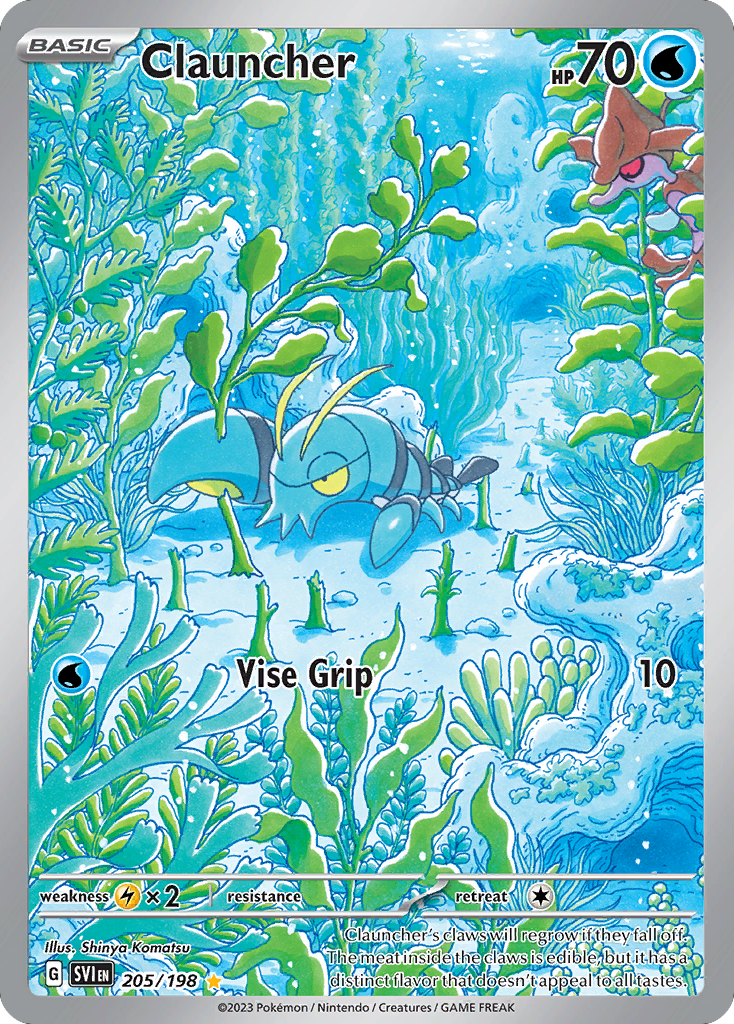
Clauncher, 205 of 198 from Scarlet and Violet, 2023. A wall of kelp and seagrass in blues and greens, so dense that Clauncher almost vanishes into the sand in the middle of it. Up in the top right corner there is a Skrelp tucked into the weeds. Skrelp is the Mock Kelp Pokemon, and the flavor text on its own cards says it drifts in the ocean blending in with floating seaweed, so Komatsu drew it doing exactly that and then declined to draw any attention to it.
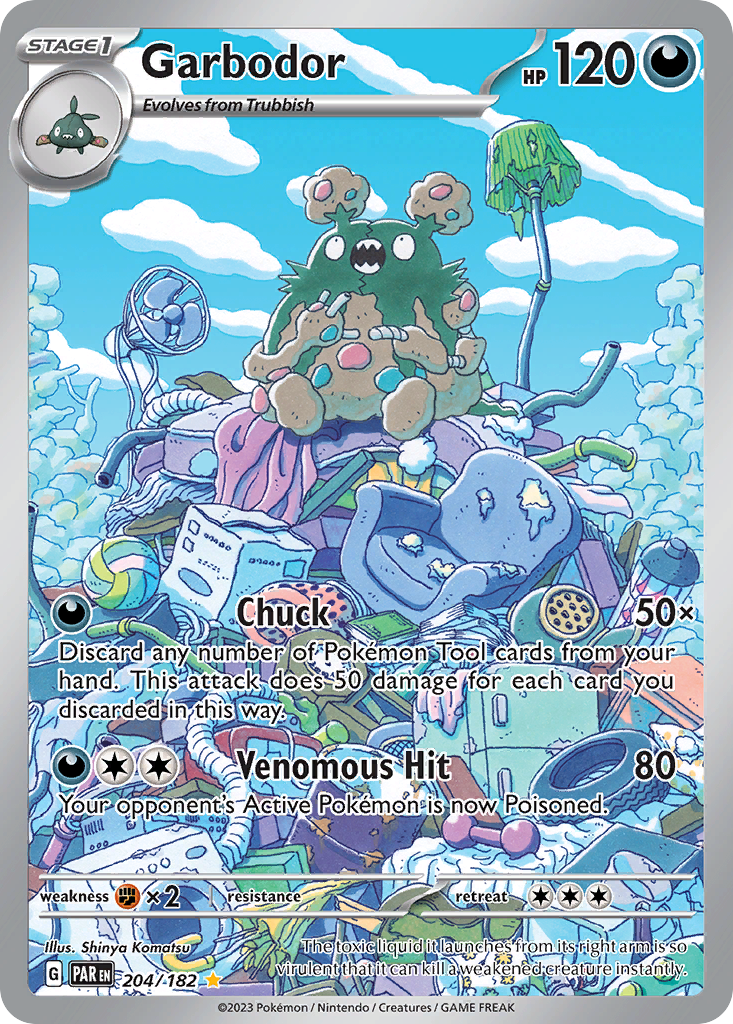
Garbodor, 204 of 182 from Paradox Rift, 2023. A mountain of landfill under a genuinely cheerful blue sky with fat cumulus clouds. An armchair, a desk fan, a cardboard box, a tire and a saucepan are all identifiable in the pile, and something that looks like an enormous dandelion has grown out of the top of it. Garbodor sits on the summit looking pleased.
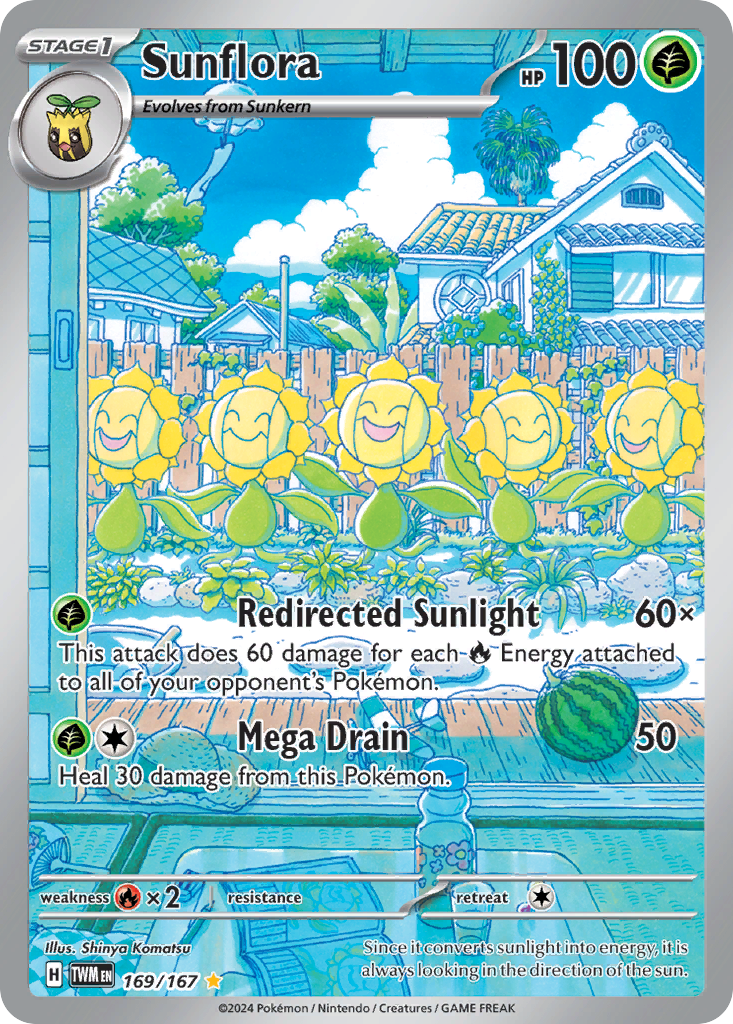
Sunflora, 169 of 167 from Twilight Masquerade, 2024. The viewpoint is from inside a veranda looking out at a suburban Japanese garden, with a cut watermelon and a drink bottle sitting on the floorboards in the foreground. Five Sunflora stand in a row along the bamboo fence, all grinning and all turned the same way, which the Pokedex will tell you is because they track the sun. Nobody in the picture is doing anything. That is the whole scene.
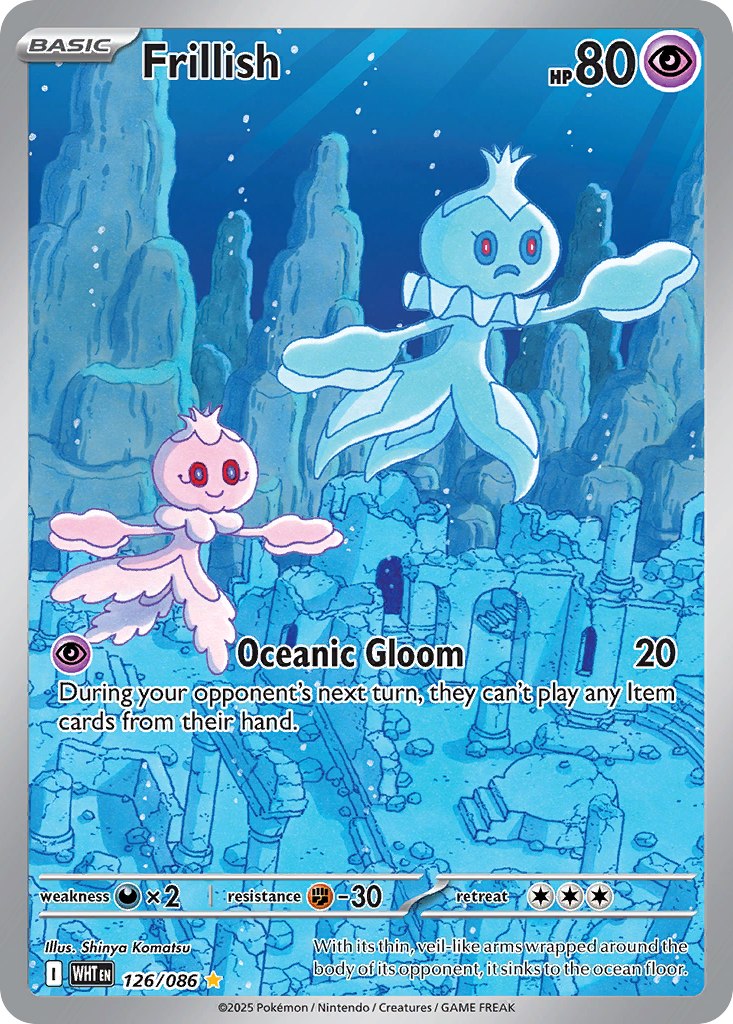
Frillish, 126 of 86 from White Flare, 2025. The darkest thing in the catalog. Toppled columns and broken masonry lie across the seabed, light comes down in shafts from somewhere far above, and the blue and pink Frillish drift through the ruins with their arms spread. The flat color and heavy outline are unchanged, but the palette drops to deep navy, and for once the place Komatsu built is one that somebody already abandoned.
Build a Shinya Komatsu binder page
Eighteen cards is the whole appeal here. Most artist pages are a selection problem, where you own four of someone's three hundred credits and spend a year arguing with yourself about the fifth. A complete Komatsu run fits in two standard pages, and the premium half of it fits in one. If you have not set up an artist section yet, the walkthrough in our guide to how to organize Pokemon cards in a binder covers the sorting decision before you start pulling cards.
For a single nine pocket page, put Alakazam ex in the center. It is the only warm card in the group, all amber and ochre, and everything else Komatsu has drawn runs cyan, green and white. Ring the center with Clauncher, Frillish, Octillery and Sunflora and the page reads as one cool field with a lamp lit in the middle of it. Keep the five big art cards on the front face and let the commons and uncommons sit on the back, since the busy backgrounds fight each other at close range.
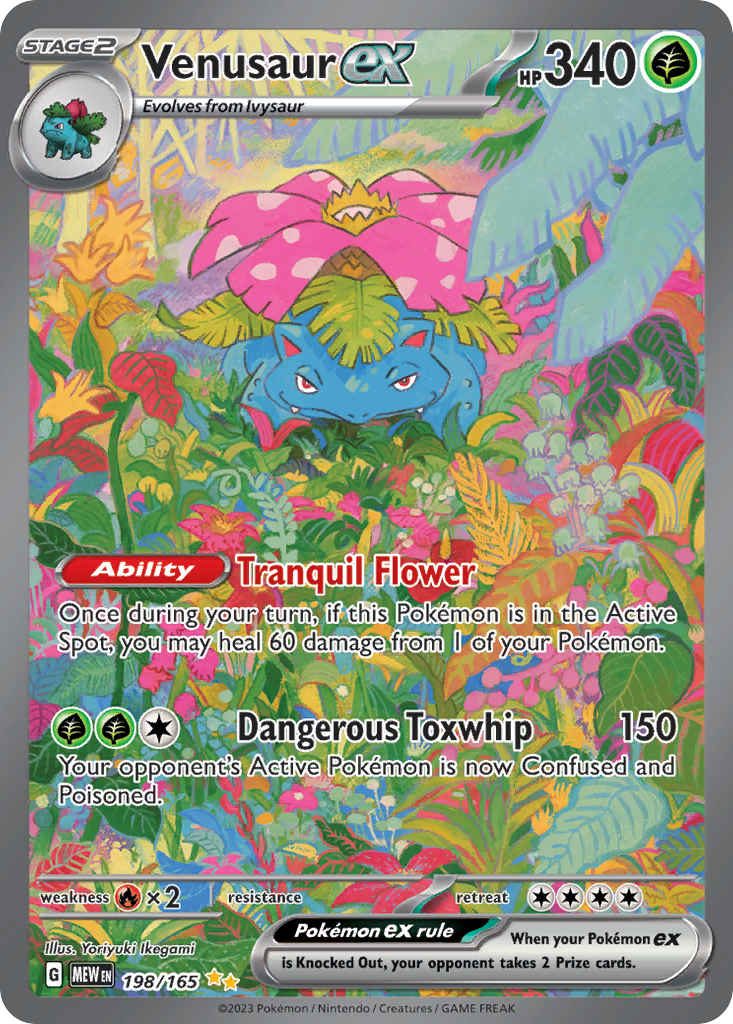
One more pairing worth trying: slot Komatsu's Alakazam ex next to the 151 Venusaur ex drawn by Yoriyuki Ikegami, another artist who fills the frame before he fills it with a Pokemon. Same set, same rarity, two very different ideas about what a background is for. Midori Harada's landscape cards make a good third. Open the builder and try the three side by side before you commit the layout.
Card art rewards slowing down, and this is a catalog that punishes speed. Every one of these cards has something in the corner that took an extra ten seconds to put there: a hidden Skrelp, a watermelon on the veranda, a clock that has been turned on its side. Pull one out of a pack and the reflex is to check the rarity symbol and sleeve it. Hold it up to the light for a moment instead and find the thing you missed.